
False Allegations in Child Abuse Cases — Why They Happen and What They Look Like
False allegations in child abuse cases are real and more complex than most people understand. Partner Matt Long explains why children sometimes name the wrong person, the difference between DCS and criminal investigations, and what a strong defense looks like.
"False allegations exist. Acknowledging that is not the same as dismissing victims. It is the foundation of any honest legal system, and the only framework that actually serves everyone involved, including the child."
False Allegations Are Real, and More Complex Than Most People Think
Acknowledging that false allegations of child abuse occur is not an attack on victims. It is a statement of fact that the legal system depends on, and ignoring it causes harm on both sides. Innocent people are convicted. Real abusers go unidentified. Children who are genuine victims end up with cases that cannot hold up because the wrong person was charged.
The popular imagination pictures a false allegation as a calculated, malicious lie, an adult or child deliberately framing an innocent person. This does happen. But it is the least common form of false allegation in child abuse cases. The more common forms are significantly more complex, more heartbreaking, and far harder to detect without a rigorous, forensically sound investigation.
Defending against a false allegation is not about proving a child is lying. It is about demonstrating what actually happened, who was actually involved, and why the investigation failed to ask the questions that would have revealed the truth.
The Four Types of False Allegation
Redirected Disclosure
The abuse is real. The abuser is not the person accused. The child names a safer or less frightening target, often a peripheral acquaintance rather than the parent or family member who actually committed the abuse, because naming the real person feels too dangerous or devastating.
Proxy Disclosure
The child has witnessed or learned about abuse happening to a peer and discloses those events as their own, in part because they want to help the real victim, and in part because they cannot or will not identify the actual person involved without exposing themselves or someone they love.
Contaminated Account
Improper interviewing techniques, including leading questions, multiple informal conversations before the formal forensic interview, and adult suggestions, have introduced false information that the child now sincerely believes. This is not the child lying. It is the investigation producing the evidence it then used to charge someone.
Malicious Fabrication
A deliberate false accusation, sometimes arising from custody disputes, personal vendettas, or adult coaching. This type exists, causes severe harm, and requires a defense attorney who can systematically expose the motivation, inconsistencies, and absence of corroborating evidence.
A contaminated account can be produced by how improper forensic interviewing contaminates a child's account.
Why "Lying" Is Rarely the Right Word, and Why That Matters
In twenty-plus years of criminal law practice, Matt Long observes that genuine lies, where a person deliberately provides false information they know to be false, are far less common than most people assume. What is common is something more nuanced and more legally challenging: the incomplete truth.
The best deception is providing truthful information out of context. A child who says "he hurt me" may be telling the truth, but the "he" may not be the person who was charged. A child who provides specific, accurate details about a sex act may be accurately describing what happened to their body while being wrong, or deliberately misleading, about who was present. The details that are true can make the details that are wrong seem credible. This is what makes these cases so difficult for investigators who are not looking carefully at the full picture.
The Threat That Keeps Children Silent and Redirects Disclosures
Abusers within family systems routinely use a specific threat to prevent disclosure: if you tell, I will go to prison, we will lose the house, your brothers and sisters will go to foster care. These threats are effective because they are partially true. They create a situation where a child who genuinely wants the abuse to stop cannot name the actual perpetrator without triggering consequences they cannot bear.
The result is a redirected disclosure, naming someone else in the hope that reporting something will make the abuse stop, without naming the person whose prosecution would destroy the family. The child is not lying about what happened to them. They are lying about who did it, for reasons that are entirely understandable and that a thorough investigation should be able to identify.
Custody Disputes and Coached Disclosures
Custody disputes are one of the most well-documented contexts for false allegations of child sexual abuse. This does not mean that abuse allegations arising during custody proceedings are presumptively false. Genuine disclosures happen in that context too. It means the context creates both a motive and an opportunity for fabrication that investigators must account for.
Coaching does not require explicit instruction. An adult who repeatedly asks a child whether a particular person has ever touched them inappropriately, who reacts with visible alarm when the child says yes, or who has the child repeat the account multiple times before the forensic interview, can permanently alter what the child reports and sincerely believes, even without ever explicitly telling the child what to say. Defense attorneys examine the full timeline of adult-child interactions before the formal disclosure to identify exactly how and when the account was shaped.
One of the most dangerous dynamics in child abuse investigations is confirmation bias: when investigators arrive with a theory and gather evidence that confirms it rather than testing it. When police have already decided who the perpetrator is before conducting interviews, they ask questions that steer toward that conclusion. The investigation then produces exactly the evidence it was looking for, not because the theory was correct, but because the process was designed to confirm it.
A defense attorney's job is to expose this dynamic: to show the jury not just what investigators found, but what they failed to look for and why that omission matters.
The Arizona Conviction Standard in Child Abuse Cases
Arizona does not require physical evidence to convict someone of child sexual abuse. A child's testimony alone, if the jury finds it credible beyond a reasonable doubt, is legally sufficient for conviction. This is one of the most important facts a person facing these charges needs to understand, and it is why the reliability of the child's account, and the process that produced it, is the central issue in almost every case.
The absence of physical evidence is common in genuine abuse cases and does not by itself support a defense. Medical examinations in child sexual abuse cases frequently show no physical findings even when abuse occurred, because many forms of abuse leave no lasting physical trace. Defense attorneys do not rely on the absence of physical evidence as a primary argument. They focus instead on the reliability of the account itself and the quality of the investigation that produced it.
Where corroborating evidence does exist, it matters in both directions. Physical findings from a medical examination, digital communications, behavioral changes observed by teachers or other adults, and prior consistent statements by the child all strengthen the State's case. Inconsistencies between the child's account and the physical evidence, between different versions of the disclosure, or between what the child said and what the timeline allows, are the foundation of a defense challenge.
Due process under the Fifth and Fourteenth Amendments requires the government to prove guilt beyond a reasonable doubt through reliable evidence gathered through proper investigation. In child abuse cases, this means forensically sound interviews using validated protocols, a complete investigation of all alternative explanations for the child's account, and a defense that has full access to every piece of evidence through discovery. Arizona's Rules of Evidence impose additional requirements: the child's testimony must be reliable, forensic interview procedures must meet defensible standards, and the defense has the right to challenge every piece of evidence through cross-examination and pretrial motions. These are not technicalities. They are the structural protections that determine whether a verdict reflects truth or reflects a failed process.
Due process serves the victim and the accused in exactly the same way. The same investigation that would have exposed the real abuser is the same investigation that would have protected the person falsely accused. When that investigation does not happen, everyone loses.Matt Long, Partner, Long & Simmons Law
DCS Investigations and Criminal Investigations: What the Difference Means for You
When a child abuse allegation is made in Arizona, two separate investigations typically begin at the same time. Understanding the difference between them, and the relationship between them, is essential for anyone facing these allegations.
A DCS investigation is a civil administrative process. Its purpose is child safety and family intervention, not criminal prosecution. The standard of proof is a preponderance of the evidence, meaning more likely than not. A DCS investigator who finds that abuse is "substantiated" has applied a civil standard that is significantly lower than proof beyond a reasonable doubt. A substantiated finding does not mean the criminal standard has been met, and it does not mean charges will follow. But it does carry serious consequences: it can result in removal of children from the home, restrictions on custody, and placement on a central registry that affects future employment and housing.
A criminal investigation is conducted by law enforcement and the county attorney's office. It applies the constitutional standard of proof beyond a reasonable doubt and governs whether charges are filed and whether a conviction is obtained. The two investigations run in parallel and share information. Law enforcement and DCS investigators communicate regularly, review each other's findings, and in many cases conduct joint interviews.
The most significant practical consequence of the parallel structure is this: statements made to DCS investigators are not protected in the same way that statements made to law enforcement are. A person who believes they are cooperating with a child safety agency rather than a criminal investigation may provide information that is later used in criminal proceedings. If you have been contacted by DCS, speak to a criminal defense attorney before responding to any DCS investigator, regardless of how the contact is characterized.
The period between initial disclosure and formal criminal charges is critically important for the defense. It is when forensic interviews are conducted, when witnesses are first questioned, and when the evidentiary record that will govern the criminal case is being built. A defense attorney who is engaged during this period can ensure that exculpatory evidence is preserved, that proper protocols are being followed, and that the accused does not inadvertently compromise their own defense through premature contact with investigators or witnesses.
Families facing both processes should understand what parents need to know when a child abuse allegation enters the home.
The overlap is illustrated by a real Arizona case where DCS involvement and criminal charges arose from the same domestic incident.
How a Thorough Investigation Distinguishes Truth from False Allegation
The tool that distinguishes a genuine allegation from a false one is not a polygraph. It is not a psychologist's opinion. It is a thorough, forensically sound investigation that gathers corroborating evidence, examines the full relationship between the child and all potential actors, and refuses to stop asking questions when the first answer seems convenient.
Every defense attorney examining a child abuse case should ask the same question a good investigator would have asked: does the evidence actually support this person as the perpetrator, or does it support the conclusion that something happened to this child? Those are different questions, and conflating them is how innocent people get charged.
What the Defense Attorney Is Actually Doing
Defending a false allegation case is not about attacking a child. It is about holding the investigation to the standard it should have held itself to. When investigators skipped steps, failed to examine relationships, failed to gather corroboration, or conducted interviews that contaminated rather than preserved the child's account, those failures are the defense attorney's case. The jury is not being asked to decide whether the child was harmed. It is being asked to decide whether the government proved, beyond a reasonable doubt, that this specific person was responsible for that harm. Those are different questions, and a skilled defense attorney ensures the jury understands the difference.
Investigators must also account for how memory changes across multiple police interviews.
False Allegation Defense in Phoenix and Maricopa County
In Maricopa County, child abuse allegations trigger parallel responses from the Maricopa County Attorney's Office, local law enforcement agencies, and DCS. The Phoenix Police Department, the Maricopa County Sheriff's Office, and municipal departments throughout the Valley all handle child abuse investigations, frequently in coordination with DCS caseworkers and forensic interview centers across the region.
The Maricopa County Attorney's Office prosecutes child abuse cases aggressively, and charging decisions in these cases are made under significant public and institutional pressure. The pre-charge period, between the initial disclosure and the filing of a complaint or indictment, is when a defense attorney's involvement is most valuable. Evidence is being gathered, witnesses are being interviewed, and investigative decisions that will shape the entire case are being made. A defense attorney who is engaged during this period can identify and preserve exculpatory evidence, identify investigation failures as they occur rather than after the fact, and in some cases prevent charges from being filed at all.
Long & Simmons Law handles false allegation defense throughout Maricopa County and across Arizona, including pre-file representation for people who have been contacted by DCS or law enforcement but have not yet been charged. Call 602-795-8808.
The pre-charge period is where how defense attorneys challenge the investigation before charges are filed can matter most.
What to Do If You Are Facing a False Allegation of Child Abuse in Arizona
The Investigation Has Already Begun
Act Before You Speak to Anyone
By the time police or DCS contact you, the investigation into a child abuse allegation is typically already underway. There may already be recorded interviews, witness statements, and a charging decision in process. Everything you say, to police, to DCS, to family members, to friends, on social media, can and will be part of this case.
Do not speak to police or DCS without an attorney present. Do not contact the child, the child's family, or any potential witnesses. Do not post anything on social media about the allegation, the child, or the people involved. Do not attempt to gather evidence or speak to witnesses yourself. Contact a criminal defense attorney immediately, before any of these things happen if possible.
Why Experience on Both Sides of the Courtroom Matters
A false allegation in a child abuse case requires a specific type of defense: one that goes back before the accusation, examines how the investigation was conducted, identifies the relationships and motivations of everyone involved, and builds an affirmative account of what actually happened, not just a challenge to what the prosecutor says happened.
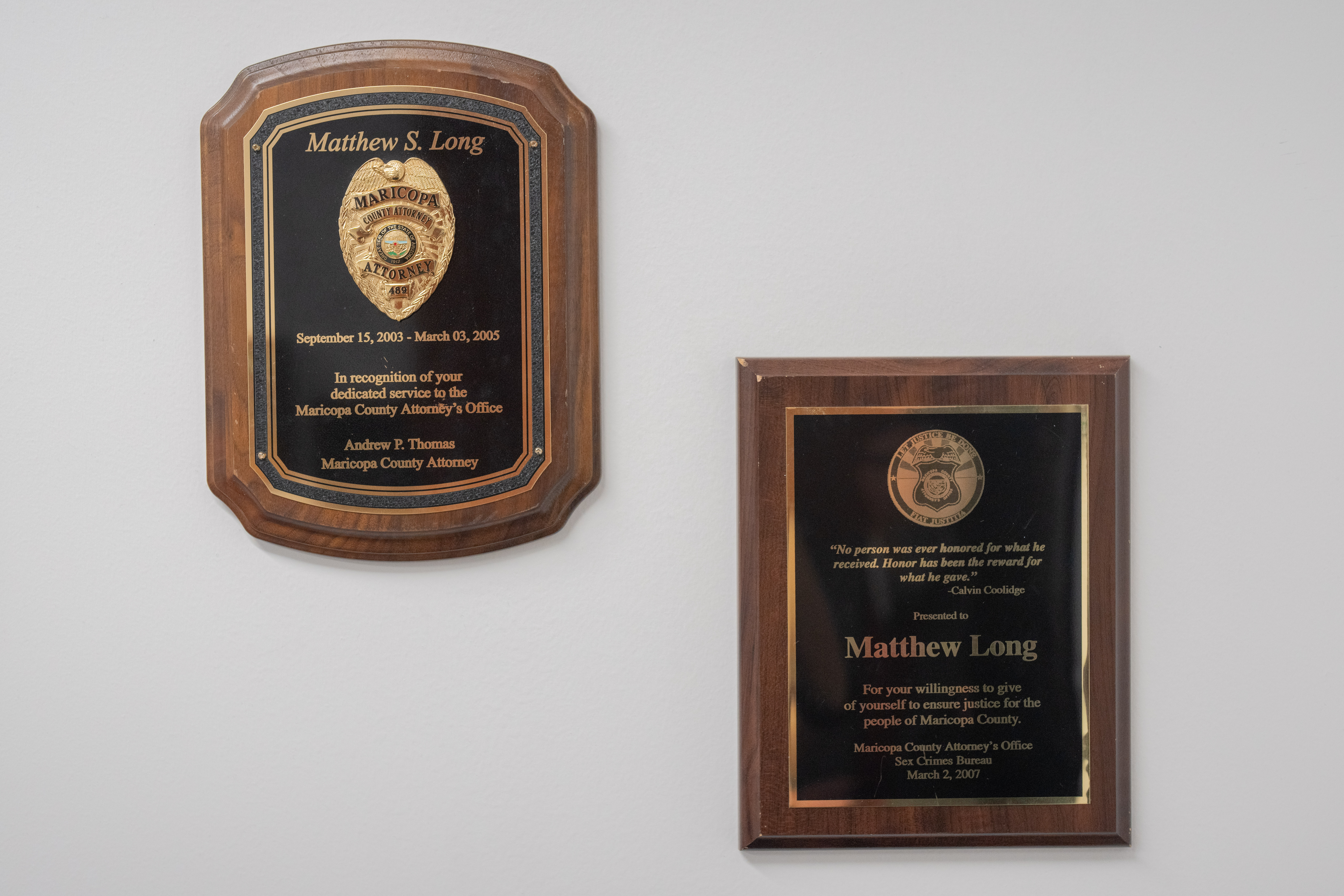
Matt Long has handled these cases from both sides of the courtroom, as a prosecutor who built them and as a defense attorney who dismantles them. As a prosecutor, he knows exactly what a strong investigation looks like, what evidence it produces, and what a complete case requires. As a defense attorney, he knows precisely where investigations fall short, what questions were never asked, and how to demonstrate to a jury that the government has not actually proved what it claims to know.
That dual experience is not just background. It is the most important credential a defense attorney can have in cases where the investigation itself is the central issue.
Matt Long, Long & Simmons Law
Matt Long
A criminal defense attorney and nationally recognized expert in child and intimacy crimes, Matt Long provides training to law enforcement agencies and professionals across the country on best practices in investigations and trial presentations. A former prosecutor in sex crimes, child crimes, and computer crimes, he brings over twenty years of experience to Arizona's most sensitive criminal cases, first for the state and now in defense, seeking justice, protecting the rights of his clients, and holding law enforcement accountable.
Falsely Accused of Child Abuse in Arizona?
Every hour matters. Call Long & Simmons Law for a confidential consultation with an attorney who has handled these cases from both sides of the courtroom.
Questions about false allegations & criminal defense
Can a child make a false allegation of abuse and still be a genuine victim?
Yes. One of the most common forms of false allegation in child abuse cases occurs when a genuine victim redirects their disclosure toward a safer or less frightening target, naming someone other than the actual abuser because naming the real person feels too dangerous, economically threatening, or emotionally devastating. The child experienced real abuse. Their identification of the accused is wrong. A false accusation does not mean nothing happened. It means the investigation failed to determine who was actually responsible.
Why would a child falsely accuse someone of abuse?
Children make false accusations for several documented reasons: redirecting disclosure away from the actual abuser toward a less frightening target; describing events that happened to a peer in order to seek help for that peer without directly identifying them; sincere belief based on contaminated memory produced by improper interviewing; or, less commonly, deliberate fabrication coached by an adult, often in a custody dispute context. Pure fabrication from whole cloth, where a child invents an accusation with no grounding in any real experience, is the least common type and the most identifiable through thorough investigation.
What evidence is needed to convict someone of child abuse in Arizona?
Arizona does not require physical evidence to convict someone of child sexual abuse. A child's testimony alone can be sufficient if the jury finds it credible beyond a reasonable doubt. However, a case based solely on a child's statement without corroborating evidence is significantly more vulnerable to defense challenges. Corroborating evidence in child abuse cases may include physical findings from a medical examination, digital communications or records, behavioral changes observed by teachers or therapists, the child's prior consistent statements, and evidence of the relationship between the accused and the child. The absence of physical evidence is common in genuine abuse cases and does not mean nothing happened.
What is the difference between a lie, a mistake, and an incomplete truth in child abuse cases?
True deliberate lies, where a child intentionally fabricates an accusation from whole cloth knowing it to be false, are actually rare in child abuse cases. Far more common are incomplete truths (where something real happened but key details are wrong, omitted, or redirected), contaminated accounts (where improper interviewing has introduced false information the child now sincerely believes), and proxy disclosures (where the child is describing abuse that happened to someone else). Understanding which category a particular account falls into requires examining the full disclosure history, not just the formal forensic interview.
How long does a child abuse investigation take in Arizona?
The timeline of an Arizona child abuse investigation varies significantly depending on the complexity of the case, the agencies involved, and whether DCS and law enforcement are conducting parallel investigations. An initial report to DCS typically triggers a response within 24 to 72 hours for high-priority allegations. Criminal investigation and charging decisions by the county attorney's office may take weeks to months after the initial forensic interview. The period between initial disclosure and formal charges is critically important for the defense, as it is when the most important evidence is being gathered and when the defense attorney needs to be actively engaged.
What is the difference between a DCS investigation and a criminal investigation in Arizona?
A DCS investigation is a civil administrative process focused on child safety and family intervention. Its standard of proof is a preponderance of the evidence, not proof beyond a reasonable doubt. A criminal investigation is conducted by law enforcement and the county attorney's office and applies the much higher standard of proof beyond a reasonable doubt. The two investigations run in parallel and share information. A finding by DCS that abuse is substantiated does not mean the criminal standard has been met. Defense attorneys engage with both processes, and statements made to DCS investigators can be used in criminal proceedings.
How does due process protect the accused in a child abuse case?
Due process under the Fifth and Fourteenth Amendments requires the government to prove guilt beyond a reasonable doubt through reliable evidence gathered through proper investigation. In child abuse cases, this means forensically sound interviews using validated protocols, corroborating evidence beyond the child's statement alone, and a complete investigation of all alternative explanations for the child's account. Arizona's Rules of Evidence impose additional requirements: the child's testimony must be reliable, forensic interview procedures must meet defensible standards, and the defense has the right to challenge every piece of evidence through cross-examination and pretrial motions.
What should I do if I have been falsely accused of child abuse in Arizona?
Contact a criminal defense attorney immediately, before speaking to police, DCS investigators, or any other party. Do not attempt to contact the child, the child's family, or potential witnesses. Do not post anything on social media about the allegation, the child, or the people involved. Do not attempt to gather evidence or conduct interviews yourself. The investigation is already underway. Every statement you make to any party before charges are filed can and will become part of the case against you. Call Long & Simmons Law at 602-795-8808 for a confidential consultation.
How does a defense attorney investigate a false allegation of child abuse?
A defense attorney investigating a false allegation will obtain and review all forensic interview recordings including every informal conversation documented before the formal recorded session; examine the full timeline of disclosure; investigate the relationships and motivations of everyone involved, including custody dynamics; identify alternative explanations for the child's account; evaluate whether investigators followed proper protocols or whether the investigation itself produced the evidence used to charge the accused; subpoena communications between parents and between parents and investigators; and trace the source chain of every piece of evidence back to its origin.
What role does coaching play in false allegations of child abuse?
Coaching, where an adult deliberately or inadvertently shapes what a child reports, does not require explicit instruction. An adult who repeatedly asks a child whether a particular person touched them inappropriately, who reacts with visible distress when the child says yes, or who reviews the events with the child multiple times before the formal interview can permanently alter what the child reports and sincerely believes, without ever telling the child what to say. Defense attorneys examine every adult-child interaction before the formal disclosure and look specifically for patterns of leading questions, emotional reinforcement, and suggestive framing that could have produced the account.
Can a false allegation arise from a custody dispute in Arizona?
Yes. Custody disputes are one of the most well-documented contexts for false allegations of child sexual abuse. Research by Kathleen Coulborn Faller and others has identified specific risk factors: recent separation or divorce, high-conflict custody litigation, prior DCS history, and one parent's history of making prior allegations. When one parent coaches a child, interprets ambiguous behavior as evidence of abuse, or uses the child welfare system as a litigation tool, the result can be a formal criminal investigation and charges against the other parent. Defense attorneys in these cases examine the full history of the custody dispute, communications between the parents, and the timeline of the disclosure relative to custody events.
General educational purposes only. Not legal advice. Contact a licensed Arizona attorney immediately if you are under investigation or have been charged.