Why Polygraphs Are Inadmissible — and Why Police Still Use Them
Polygraphs are inadmissible in Arizona courts, yet police use them every day. Trained interrogation expert Matt Long explains why lie detector tests are unreliable, how police legally use deception to extract confessions, and exactly what to do if you have been asked to take one.
"Polygraphs are the liar's tool. They are not designed to find the truth. They are designed to get a confession. If you are ever asked to take one, call an attorney before you agree to anything."
Polygraph Results Are Not Admissible in Arizona Courts
This is the foundational fact every Arizona resident should know before any interaction with law enforcement: polygraph results, whether they indicate that you are telling the truth or lying, cannot be introduced as evidence in an Arizona criminal trial. Courts have rejected polygraph evidence precisely because the science behind it is unreliable, unreplicable, and cannot meet the legal standard for expert testimony.
And yet police administer polygraphs constantly. They invite suspects in for voluntary examinations. They tell people the machine proves they are lying. They use the threat of failed results to pressure confessions and additional disclosures. All of this is legal. None of it has anything to do with detecting the truth. The polygraph is a psychological tool, and understanding exactly how it works is the first step to protecting yourself when police use it against you.
You are never legally required to submit to a polygraph examination in an Arizona criminal investigation. Your refusal cannot be used as evidence of guilt. But everything you say before, during, and after the polygraph session, to officers, in the room, on the walk to the car, can be used against you in court, even though the test results cannot.
Do not agree to any polygraph examination, any voluntary interview, or any law enforcement contact without first speaking to a criminal defense attorney. Call Long & Simmons Law at 602-795-8808 before you respond to any police request.
The Science of Lie Detection, and Why It Does Not Work
A polygraph does not detect lies. It detects physiological stress responses: changes in blood pressure, respiration, skin conductivity, and pulse. The underlying theory is that lying causes stress, and that stress produces measurable physiological changes distinguishable from the stress produced by telling the truth. There are two fatal problems with this theory.
First, stress is not the same as deception. A completely honest person who is nervous, shame-prone, highly self-reflective, or simply uncomfortable being questioned by law enforcement will produce exactly the same physiological responses as someone who is lying. A person who cannot find the words to describe a complex experience accurately will experience stress in trying to communicate it, and that stress will register as deceptive regardless of whether they are telling the truth.
Second, practiced liars and individuals with certain personality profiles produce minimal stress responses even when lying. They pass polygraphs easily. The tool rewards the person who feels least conflicted about providing false information, precisely the population it was supposedly designed to identify.
Why Honest People Are Most at Risk
The most dangerous misconception about polygraphs is that innocent people have nothing to fear. People who are highly conscientious, emotionally sensitive, or prone to self-reflection are exactly the people most likely to fail a polygraph when telling the truth, because they question their own answers, worry about whether they have expressed themselves accurately, and experience anxiety in high-stakes situations. Their physiological response to the pressure of the examination reflects their honesty, not their guilt. The machine cannot make this distinction.
Honest People Fail
People who are highly conscientious, self-critical, or shame-prone will question their own answers even when truthful, producing stress responses that register as deceptive. The more honest and self-aware a person is, the more likely they are to produce a failed result.
Liars Can Pass
Individuals who are practiced at deception, emotionally detached, or calm under pressure produce clean polygraph results while lying. The tool detects stress. People who feel no stress when lying produce no detectable signal.
Inconclusive Is Common
The most frequent polygraph result is inconclusive. The tool cannot determine anything meaningful from the data. Courts reject polygraphs partly because their most common output is no answer at all.
Questions Are Severely Limited
Polygraph examiners can only ask a narrow set of highly controlled yes/no questions. The moment complexity, context, or nuance enters, which every real criminal case requires, the tool produces unreliable results.
Voice Stress Analysis: A Different Technology, the Same Problem
Voice stress analysis is a variation of polygraph technology that claims to detect deception through changes in vocal stress patterns, specifically microtremors, tiny fluctuations in vocal cord tension, that allegedly occur when a person lies. It is marginally more technologically sophisticated than a traditional polygraph in appearance. It is equally unreliable in practice.
Where a traditional polygraph measures four to six physiological channels simultaneously, including cardiovascular activity, respiratory patterns, and skin conductivity, voice stress analysis measures only one: claimed microtremors in vocal patterns. Both tools measure physiological stress responses rather than deception itself. Neither can distinguish between a lying suspect and an honest person who struggles to find words for a complex experience.
The National Research Council conducted a comprehensive review of deception detection technologies and concluded that voice stress analysis has no scientific foundation as a truth-detection tool, performing no better than chance. Computerized voice stress analysis tools sold commercially under brand names including the CVSA and the Diogenes Lantern have all failed independent scientific validation. Like traditional polygraphs, voice stress analysis is inadmissible in Arizona courts. Law enforcement officers who use it routinely acknowledge, privately, that it provides no reliable information about truth or deception. Its value is the same as the polygraph's: psychological pressure, not truth detection.
The best deception is providing truthful information out of context. A polygraph that can only ask three narrow yes-or-no questions will never get there. It is not designed to. It is designed to get a confession.Matt Long, Partner, Long & Simmons Law
What Police Are Actually Trying to Accomplish With a Polygraph
Law enforcement agencies use polygraphs as a psychological manipulation tool, not a truth-detection instrument. Best practices in law enforcement interrogation explicitly teach officers to use deception. Good cop, bad cop is not a Hollywood invention; it is a trained strategy. The polygraph fits perfectly into this framework.
When an officer tells a suspect "the machine says you're lying," the goal is not to convey a scientific finding. It is to make the person believe they have been caught, to produce the psychological state in which confession feels like the only remaining option. The entire apparatus of the examination, the wires, the official-looking equipment, the examiner's neutral demeanor, the printed results, all of it is theater designed to create a specific psychological effect.
Matt Long has recounted cases where the polygraph equipment was not functioning, and officers simply pre-printed pages reading "LIE. LIE. LIE." on a printer or fax machine, connected the suspect to unrelated equipment, and fed the pages through to show the suspect "the results." The machine was never connected to anything. The results were fabricated before the examination began.
This is legal in Arizona. Officers are permitted to lie about evidence during an interrogation, including about the results of a polygraph examination that was never actually administered. Everything the suspect says in response to those fabricated results can still be used against them in court. The deception is the point. The confession is the goal.
The Reid Technique: How the Polygraph Fits Into a Larger Strategy
The Reid Technique is the most widely used police interrogation method in the United States, and it treats the polygraph not as a standalone truth-detection tool but as the first phase of a structured two-stage interrogation process. Understanding how the technique works explains why police continue to use polygraphs even though the results are inadmissible.
The first stage is called the behavioral analysis interview. The examiner administers the polygraph while observing the suspect's behavioral responses: eye movements, posture shifts, verbal hesitations, micro-expressions. The examiner then uses those observations, not the machine's output, to decide whether to move to the second stage: an accusatory interrogation in which the examiner presents the suspect as already proven guilty and works to produce a confession.
The behavioral analysis interview component of the Reid Technique has no independent scientific validity. Research on behavioral deception cues consistently shows that trained interrogators perform no better than untrained observers at identifying deception from behavioral cues. Despite this, Arizona law enforcement agencies that use Reid-style interrogation follow the technique's structured deception strategy, in which the polygraph functions as a psychological setup rather than a truth-detection instrument. The machine's purpose is to convince the suspect they have been caught. The interrogation that follows is where the real work happens.
Research by Richard Leo, Saul Kassin, and others documents that the psychological pressure of being told a machine proved you lied can cause innocent people to confess in order to end the process or satisfy the authority figure conducting the test. The Reid Technique is specifically associated with elevated rates of false confessions. People who are innocent, nervous, shame-prone, or highly self-reflective are most vulnerable, precisely because they are most responsive to the psychological pressure the technique is designed to generate.
The pressure works in part because of how acute stress impairs memory and produces false accounts.
Polygraphs in Sex Offender Treatment Programs
Polygraphs are routinely used in Arizona sex offender treatment programs as a tool to monitor compliance and encourage disclosure. The results are equally unreliable in this context, and the dynamics of the treatment setting create a specific set of risks that people on supervised release need to understand.
Treatment participants quickly learn what answers the examiner needs to hear in order to produce a passing result. Research documents that participants provide false admissions, saying they did things they did not do, because the treatment system rewards disclosures that demonstrate accountability. The tool validates itself through the confessions it produces, creating a feedback loop of false information that has nothing to do with reality. A passed polygraph in treatment means the participant satisfied the examiner. It does not mean the statements they made were true.
For people on supervised release who are required to submit to polygraphs as a condition of their supervision, this dynamic creates serious risks. An examiner who decides a result is deceptive can trigger a probation violation proceeding based on a tool that courts have already ruled is scientifically unreliable in every other context. Speak to your attorney before any polygraph examination in a treatment or supervision context, and before making any disclosure the examination is designed to elicit.
If You Have Been Asked to Take a Polygraph in Arizona
Whether you are under investigation, have been charged, or have simply been invited in for a conversation that includes a polygraph, the guidance is always the same: do not proceed without first speaking to a criminal defense attorney. The stakes are too high and the process too easily manipulated to navigate alone.
If police have contacted you by phone, in person, or through a family member about any matter involving a potential criminal investigation, do not speak to them without an attorney present. Not about what you know. Not about where you were. Not about anything. You have the right to remain silent, and exercising that right is the most protective thing you can do before you understand what you are facing.
Call Long & Simmons Law at 602-795-8808 for a confidential consultation. We will tell you exactly where you stand and exactly what to do next.
Keeping Polygraph References Away From the Jury: The Motion in Limine
Polygraph results are already inadmissible as evidence in Arizona criminal trials without needing a specific motion to exclude them. Arizona courts have consistently held that polygraph evidence fails the scientific reliability standard. But inadmissibility of the results is not the same as protection from all polygraph-related prejudice at trial.
A prosecutor or witness who mentions, even in passing, that a defendant refused to take a polygraph, or that the results were unfavorable, can cause serious and potentially irreversible prejudice with a jury. Jurors who hear that a defendant declined a lie detector test will draw inferences that no jury instruction can fully correct. The same problem arises if a witness mentions what was said during a polygraph session in a way that indirectly signals the results.
Defense attorneys address this through a motion in limine, a pretrial motion seeking a court order prohibiting any reference to the polygraph examination before the jury. This includes whether the defendant agreed or refused to take one, what the results purportedly showed, and any statements made during the examination process that would indirectly communicate the outcome. Filing this motion, and obtaining a ruling before trial begins, is a standard step in any Arizona criminal case where a polygraph was part of the investigation.
Polygraphs and Police Interrogation in Phoenix and Maricopa County
Maricopa County law enforcement agencies, including the Phoenix Police Department, the Maricopa County Sheriff's Office, and municipal departments throughout the Valley, use polygraphs and voice stress analysis as standard investigative tools. The Phoenix Police Department has used computer voice stress analysis technology in interrogations. In sex crimes and child abuse investigations in particular, polygraphs are often among the first tools deployed, both with suspects and, in some contexts, as part of the broader investigative process.
If you have been contacted by any Maricopa County law enforcement agency and asked to submit to a polygraph, a voluntary interview, or any examination described as a truth verification test, the request carries legal risk regardless of what you are told about the purpose. The results may be inadmissible. Everything you say is not.
Long & Simmons Law handles criminal defense throughout Maricopa County and across Arizona, including pre-file representation for people who have been contacted by police but not yet charged. The earlier you have an attorney involved, the more options you have. Call 602-795-8808.
Polygraph claims are one route through which how false narratives in police investigations reach Arizona juries.
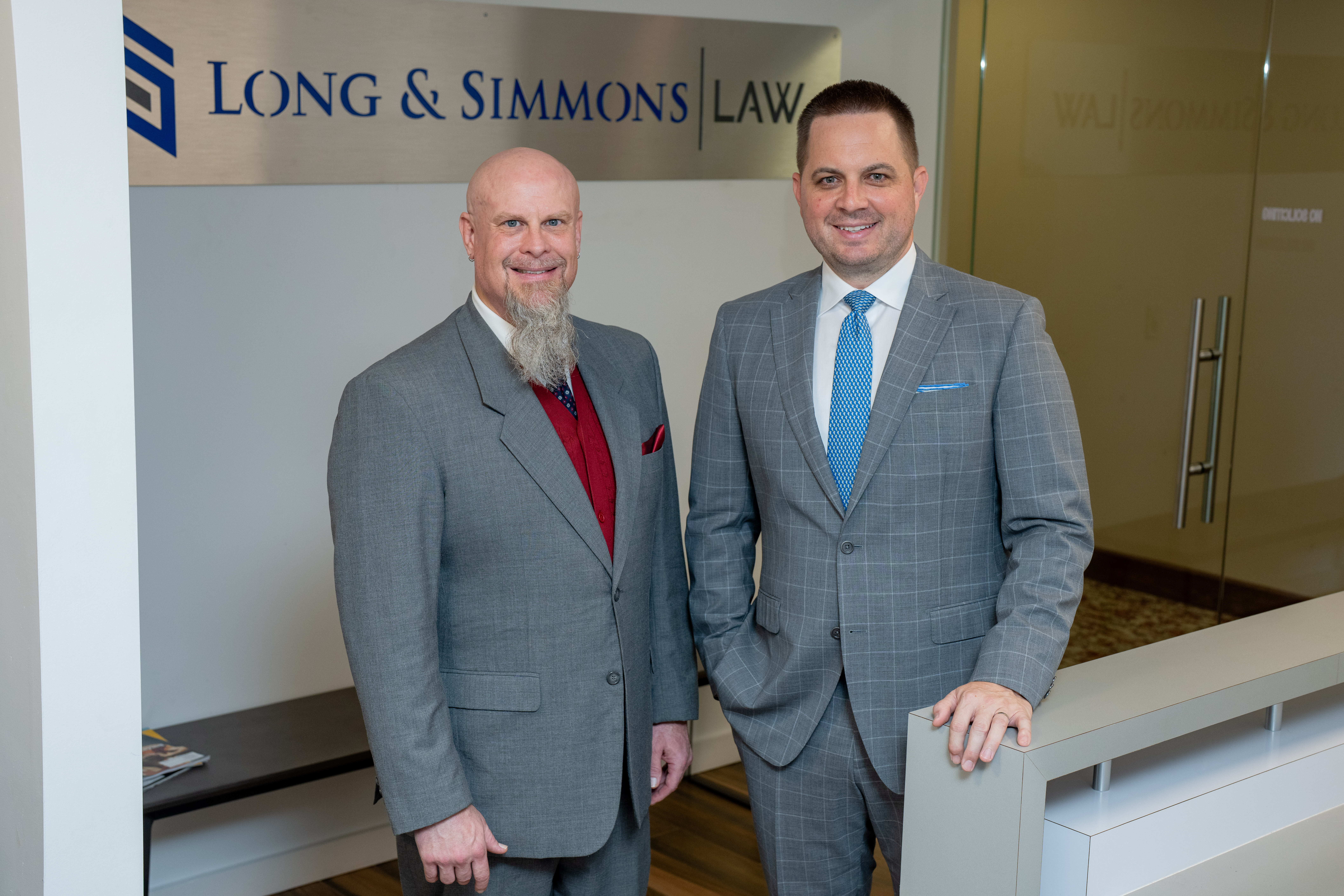
Matt Long, Long & Simmons Law
Matt Long
A criminal defense attorney and nationally recognized expert in child and intimacy crimes, Matt Long provides training to law enforcement agencies and professionals across the country on best practices in investigations and trial presentations. A former prosecutor in sex crimes, child crimes, and computer crimes, he brings over twenty years of experience to Arizona's most sensitive criminal cases, first for the state and now in defense, seeking justice, protecting the rights of his clients, and holding law enforcement accountable.
Have You Been Asked to Take a Polygraph?
Do not submit to any law enforcement examination without speaking to an attorney first. Call Long & Simmons Law for a confidential consultation, before you say another word.
Questions about evidence, interrogation & your rights
Are polygraph results admissible in Arizona courts?
No. Polygraph results are not admissible as evidence in Arizona criminal courts because they are considered scientifically unreliable. Under Arizona case law and the standards established by Frye v. United States and its successors, polygraph evidence cannot meet the general acceptance threshold required for admissibility. The results cannot be used to prove guilt or innocence at trial, and jurors are not permitted to consider them. However, anything a person says during a polygraph session, before, during, or after the test, can be used against them in court.
Can police use a polygraph to get a confession in Arizona?
Yes. Police legally use polygraphs not to detect truth but as a psychological tool to pressure suspects into confessing or providing more information. Under Arizona law, police are permitted to deceive suspects during interrogation, including lying about polygraph results, telling a suspect the machine proved they are lying, and using entirely fabricated equipment. This deception is legal as long as it does not produce a confession that is involuntary under the totality of the circumstances. Everything said during the process can be used against the suspect in court.
Can a polygraph cause a false confession?
Yes. Polygraph examinations are a documented contributing factor to false confessions. Research on false confessions, particularly the work of Richard Leo and Saul Kassin, shows that the psychological pressure of being told a machine proved you lied can cause innocent people to confess in order to end the process or satisfy the authority figure conducting the test. People who are innocent, nervous, shame-prone, or highly self-reflective are most vulnerable to this dynamic precisely because they produce stress responses that register as deceptive even when truthful.
What is the Reid Technique and how does it relate to polygraphs?
The Reid Technique is a widely used police interrogation method that treats the polygraph as the first phase of a two-stage interrogation process. The polygraph phase, called the behavioral analysis interview, is designed not to detect deception but to identify behavioral cues the examiner then uses to justify an accusatory interrogation. Critics note that the behavioral analysis interview component has no scientific validity, and that the Reid Technique as a whole is associated with elevated rates of false confessions. Arizona law enforcement agencies that use Reid-style interrogation follow a structured deception strategy in which the polygraph is a psychological setup, not a truth-detection tool.
What happens if I fail a polygraph in Arizona?
Failing a polygraph has no direct legal consequence in Arizona criminal proceedings because the results are inadmissible. However, a failed result, or a result the examiner claims is deceptive, is routinely used by police to justify continued interrogation, apply additional psychological pressure, and attempt to extract a confession or additional statements. Those statements are admissible. A failed polygraph result can also influence investigative decisions about whether to pursue additional evidence or focus on a particular suspect, even though the result itself cannot be used in court.
Should I agree to take a polygraph if police ask me to in Arizona?
No. You should consult with a criminal defense attorney before agreeing to any polygraph examination. The results may be inadmissible at trial, but everything you say during the process is not. Refusing to take a polygraph cannot be used as evidence of guilt in Arizona criminal proceedings. The safest response to any police request, for a polygraph, an interview, or any other contact, is to say you would like to speak to an attorney first, and then stop talking. Call Long & Simmons Law at 602-795-8808.
What is voice stress analysis and is it reliable?
Voice stress analysis claims to detect deception by measuring microtremors, tiny fluctuations in vocal cord tension, that allegedly occur when a person lies. It is equally unreliable as traditional polygraphs. Published research has found voice stress analysis performs no better than chance as a lie detector, and the National Research Council's comprehensive review of deception detection technologies concluded that voice stress analysis has no scientific foundation as a truth-detection tool. Like traditional polygraphs, it is inadmissible in Arizona courts.
Can I be forced to take a polygraph in Arizona?
No. Polygraph examinations are voluntary in Arizona criminal investigations. You cannot be legally compelled to take one as a suspect, and your refusal cannot be used as evidence of guilt. The exception applies to individuals already convicted and under supervision: Arizona courts can order sex offenders on probation or supervised release to submit to polygraph examinations as a condition of their supervision. If you are in a supervisory relationship with the court and have questions about polygraph requirements, speak to your attorney before the examination.
How are polygraphs used in sex offender treatment programs in Arizona?
Polygraphs are routinely used in Arizona sex offender treatment programs as a tool to monitor compliance and encourage disclosure. The results are equally unreliable in this context. Treatment participants quickly learn what the examiner needs to hear to produce a passing result, and research documents that participants provide false admissions, saying they did things they did not do, because the treatment system rewards disclosures that demonstrate accountability, not accuracy. A passed polygraph in treatment means the participant satisfied the examiner, not that the statements they made were true.
What is the difference between a polygraph and voice stress analysis?
A traditional polygraph measures four to six physiological channels simultaneously, including cardiovascular activity, respiratory patterns, electrodermal activity, and sometimes movement, while the subject answers questions. Voice stress analysis measures only one channel: claimed microtremors in vocal patterns. Both tools measure physiological stress responses rather than deception itself. Neither is admissible in Arizona courts. The broader category of computerized voice stress analysis tools, sold commercially under brand names including the CVSA and the Diogenes Lantern, have all failed independent scientific validation.
Can a defense attorney get a polygraph excluded from an Arizona criminal case?
Polygraph results are already inadmissible as evidence in Arizona criminal trials without needing a specific motion to exclude. However, a defense attorney must file a motion in limine to ensure that no reference to a polygraph examination, including whether the defendant agreed or refused to take one, or what the results purportedly showed, is made before the jury. Any such reference could be unduly prejudicial, and defense attorneys routinely seek pretrial orders prohibiting it.
General educational purposes only. Not legal advice. Contact a licensed Arizona attorney immediately if you are under investigation or have been charged.